Your Sydney Commercial Building's Winter Maintenance Checklist (Before It Starts Leaking on Your Tenants)
It doesn't snow in Sydney. This is the logic that leads commercial building owners to completely ignore winter building maintenance, right up until the moment a tenant calls at 7am on a Tuesday to report that water is dripping through the ceiling tiles in the boardroom.
Sydney winter is mild by comparison to Melbourne or Canberra. But mild doesn't mean harmless. It means relentless. June through August in Sydney brings persistent rain, cold mornings, moisture infiltration, and the kind of slow-burn building problems that only reveal themselves under pressure. The combination of blocked gutters, degraded sealant, and an HVAC system running at full tilt for the first time in months creates the perfect conditions for an expensive repair bill.
The good news: almost all of it is preventable with the right winter building maintenance programme.
Why Winter Is the Highest-Risk Season for Sydney Commercial Buildings
Summer storms get the headlines, but winter is when building pathology quietly compounds. Rain falls regularly, not dramatically. It finds every small gap, works its way past degraded flashings, travels laterally through cracked sealant, and pools in blocked gutters until it finds somewhere else to go. Usually somewhere you don't want it.
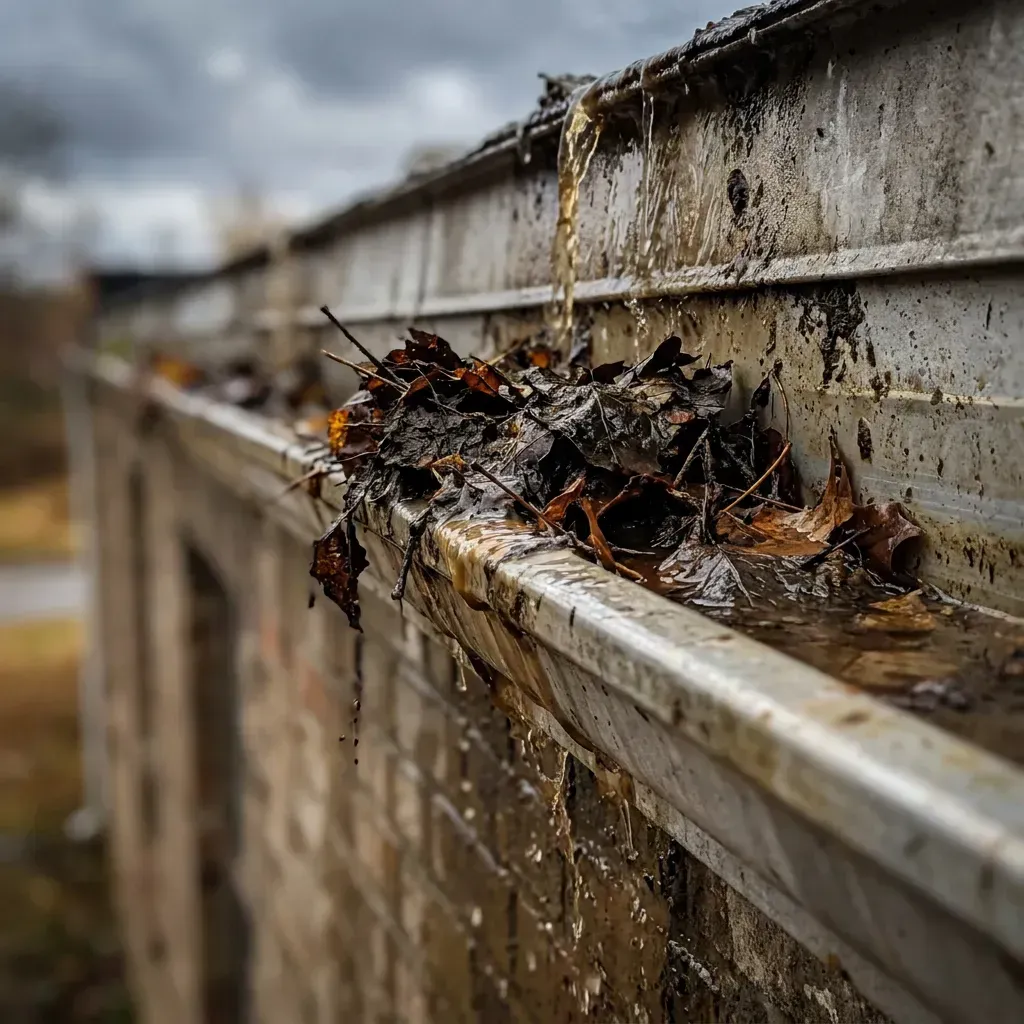
[Image: Close-up of commercial building gutter blocked with leaves and debris, water overflowing]
At the same time, your HVAC system is under the most load it will see all year. Filters that were marginally acceptable in September are now visibly struggling. Ductwork that wasn't quite sealed properly becomes an energy efficiency problem. And if you haven't had your mechanical systems serviced since last winter, you're rolling the dice on a breakdown during the coldest weeks of the year.
The financial argument for preventive winter building maintenance is not subtle. Insurance carriers are increasingly requiring documented inspection histories before paying storm damage claims. A building without a maintenance record is a building with a potential coverage problem.
The Winter Commercial Building Maintenance Checklist
Here's what a professional property maintenance Sydney programme should cover before and during Sydney's winter months.
Area Task Priority
Gutters and downpipes Clear debris, flush flow, check fixings High
Roof membrane Inspect flashings, seams, and penetrations High
HVAC systems Filter replacement, full service, calibrate thermostats High
Facade sealant Check windows, joints, cladding perimeter Medium
External drainage Test sumps and drain pits Medium
Emergency lighting Test and replace batteries Medium
Fire systems Annual service if due High
Plumbing Check for slow drains, running fixtures Low-Medium
Electrical Check external fittings and carpark lighting Low
Gutters and Stormwater
This is the single most impactful item on the list. Sydney's plane trees and gums mean gutters fill faster than most building owners realise. Blocked gutters overflow behind fascias, saturate wall cavities, and cause damage that costs far more to repair than the cost of clearing them twice a year. Have them cleaned now, before the June rains settle in.
Roof and Flashings
Flashing failure at penetrations including HVAC curbs, vents, skylights, and parapet walls is the most common origin of active roof leaks in commercial buildings. A visual inspection by a qualified tradesperson, looking specifically at membrane seams, coping caps, and any previously patched areas, takes a few hours and can identify problems before they become urgent.
HVAC Systems
Your heating and cooling system should be serviced before it needs to work hard. Replace filters, clean coils, lubricate moving parts, test thermostat calibration, and check ductwork for leaks. A well-maintained HVAC system runs more efficiently, costs less to operate, and is far less likely to fail during the coldest week of July. These are jobs for a licensed commercial HVAC technician, not a general handyman.
[Image: Technician servicing commercial HVAC unit on a Sydney commercial building rooftop]
Facade and Sealant
External sealant around windows, doors, expansion joints, and cladding panels has a limited service life. UV exposure during summer causes hardening and cracking, and winter rain is the first real test of whether it's still performing. A walk-around inspection looking for cracked, missing, or separated sealant beads is quick and cheap. Rectifying it early costs a fraction of what it costs after water has entered the wall.
What Happens When You Skip Winter Building Maintenance
[Image: Water damage on a commercial building interior ceiling with staining and paint bubbling]
The short answer: you pay for it eventually, and the bill is bigger the longer you wait.
A blocked gutter that overflows for two winters doesn't just damage the gutters. It saturates the wall framing behind the fascia, promotes mould growth in the wall cavity, and potentially compromises the building envelope certification your insurance policy relies on. Remediation of water-damaged wall cavities in commercial buildings routinely runs into tens of thousands of dollars.
A degraded roof membrane seal that's ignored for one season might be a $1,500 repair. Left for two seasons, it's a $15,000 rectification involving membrane replacement and internal ceiling reinstatement.
The building maintenance and repair costs of inaction scale quickly. The maths almost always favour preventive action over reactive repair.
How Often Should a Sydney Commercial Building Be Maintained?
The minimum standard for most commercial tenancies is a formal maintenance inspection twice a year: typically in March or April after summer, and in May or June before winter. Many well-managed buildings run quarterly inspections with annual specialist checks for electrical, fire, and mechanical systems.
For strata buildings, the obligations are more structured. The strata committee is responsible for common property maintenance, and a failure to maintain common property to a reasonable standard can expose owners to liability under the Strata Schemes Management Act 2015 (NSW).
Choosing the Right Commercial Maintenance Partner in Sydney
Not every tradesperson is set up for commercial property work. Residential handymen don't carry the public liability limits or the WHS documentation that commercial tenancies require. A quality property maintenance Sydney provider will give you a documented scope of works, sign-off certificates for fire and electrical items, and a written maintenance report that becomes part of your building's compliance record.
ZGC Enterprise provides property maintenance services for commercial properties, retail tenancies, strata buildings, and office spaces across Sydney. Whether you need a one-off winter inspection or an ongoing maintenance programme, the conversation starts with a call. Reach the team on 0411 558 173 or visit zgcenterprise.com.au to find out more.
FAQ: Winter Building Maintenance Sydney
What maintenance does a commercial building need before winter in Sydney?
Priority items are gutters and stormwater drainage, roof and flashing inspections, HVAC servicing, facade sealant checks, and fire and emergency lighting systems. Address these in May or early June before persistent rain arrives.
How often should commercial gutters be cleaned in Sydney?
Twice a year as a minimum: once in autumn (March to April) after the deciduous leaf drop, and once in late spring. Buildings near street trees or parks may need more frequent attention.
What does commercial winter building maintenance cost in Sydney?
A comprehensive winter maintenance programme for a mid-size commercial tenancy typically runs $1,500 to $5,000 depending on scope, building size, and any identified repairs. Preventive maintenance is almost always cheaper than reactive repairs.
Is winter building maintenance the landlord's or tenant's responsibility?
It depends on the lease. Most commercial leases in NSW require tenants to maintain the premises in good repair and condition, while the landlord is typically responsible for the base building structure, roof, and common areas. Review your lease carefully.
Can a commercial handyman carry out building maintenance in Sydney?
For routine tasks like gutter cleaning and external inspections, yes. For fire systems, electrical work, and HVAC servicing, you need licensed tradespeople with the appropriate certifications. Always check insurance and licensing before engaging a contractor.