The Growing List on Your Maintenance Whiteboard Isn't Going to Fix Itself
There’s a particular kind of list that lives on whiteboards in offices, cafes, and commercial buildings all across Sydney. You know the one. It starts with a single item sometime in February, gets a line through nothing, and by April it’s grown to eleven entries in four different colours of marker. Storeroom door handle. Blinds in meeting room 2. That thing with the ceiling tile.
The list doesn’t get actioned. It gets inherited.
The next office manager circles the whole thing in red. Adds two more items. Then the whiteboard gets replaced with a new one, and somehow the list survives the transition, slightly longer, slightly more embarrassing.
What no one talks about is what that list is costing you, and it isn’t only what you’ll eventually pay to fix everything on it.

The Real Cost of Deferred Maintenance Isn’t the Repair Bill
Most business owners think about deferred maintenance in terms of the repair bill. Fix it now versus fix it later. Later always feels like a financial decision. It isn’t.
Research into workplace satisfaction consistently shows that the physical environment affects employee performance and morale in ways that are measurable and significant. A 2023 report from the Australian HR Institute found that workplace environment ranked among the top five factors affecting employee engagement for Australian workers. A flickering light fitting or a bathroom door that doesn’t close properly isn’t a nuisance. It’s a daily signal that the business doesn’t sweat the details.
For client-facing businesses, that signal goes external too. Clients walking into a reception with a water-stained ceiling tile or a wobbly meeting room chair form an opinion before anyone has said a word. In professional services, retail, and hospitality especially, the physical environment is part of the pitch.
The reactive approach to maintenance also carries a compounding cost most operators don’t price in: the escalation tax. A stiff door closer ignored for eight weeks becomes misaligned hardware. The misaligned hardware wears the door frame. The door frame eventually needs replacing rather than just adjusting. What started as a two-hour handyman job becomes a joinery repair. This pattern plays out across every category of commercial maintenance, without exception.
What “Deferred” Actually Looks Like in a Sydney Workplace
The maintenance that gets deferred is almost never the dramatic kind. It’s the category that sits just below the threshold of urgency but just above the threshold of inconvenience, and it accumulates fast in any working commercial space.
In a typical Sydney office or retail premises, the common backlog categories look like this:
| Category | Common Deferred Items | What Happens When Left |
|---|---|---|
| Door and hardware | Stiff closers, loose hinges, worn seals | Misalignment, frame damage, security risk |
| Wall and ceiling | Scuffs, holes, lifted tiles, water stains | Larger patch jobs, mould risk, WHS exposure |
| Joinery and furniture | Loose cabinet doors, broken drawer runners, chipped bench edges | Client-facing deterioration, staff frustration |
| Fixtures and fittings | Loose grab rails, damaged shelving brackets, worn floor trim | Trip hazards, liability exposure |
| Signage and display | Faded or damaged signage, loose-mounted screens | Brand presentation erosion |
None of these is individually catastrophic. Collectively, they define how your premises feels to everyone who uses it.
Why Businesses Keep Deferring (And Why the Logic is Flawed)
The most common reason small commercial maintenance jobs get deferred isn’t budget. It’s friction.
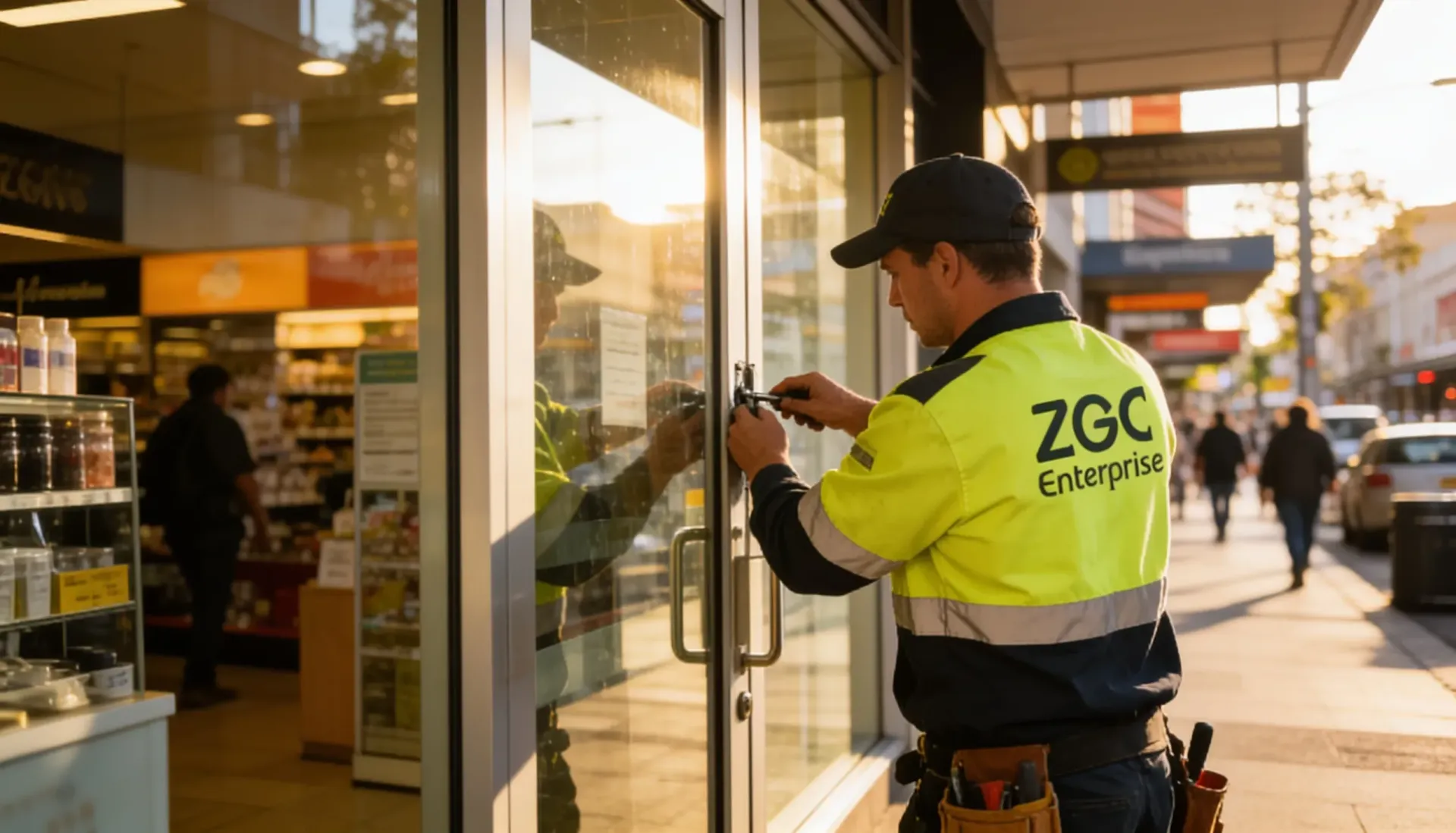
No one knows who to call. The last handyman was a bloke someone knew who did a reasonable job on his house. Finding a commercial operator who’s insured, reliable, and available without two weeks notice feels like more effort than the job itself. So it goes on the whiteboard. And stays there.
The second reason is the myth of self-sufficiency. Someone always knows a guy. Or someone in the office has a cordless drill and good intentions. But commercial property work carries liability exposure that personal goodwill doesn’t cover. NSW SafeWork is clear that employers have a duty to maintain safe premises. A cable-tied shelf bracket that fails and injures a staff member isn’t a sad accident. It’s a WorkCover claim and a potential fine.
The third reason is scope uncertainty. Business owners often don’t know whether a job needs a licensed tradesperson or not, and they’d rather do nothing than do something wrong. The reality is that the vast majority of the items on a typical maintenance backlog don’t require a licence at all. They sit squarely in commercial handyman territory, and a capable operator can clear a whiteboard list in a single site visit.
The Scheduled Maintenance Model: Clearing the List Before It Writes Itself
The businesses that run clean premises don’t have better luck with maintenance. They have a different system.
Instead of waiting for problems to reach the whiteboard, they book a regular maintenance visit, typically quarterly for low-traffic premises, monthly for high-traffic retail or hospitality sites. The handyman does a walk-through, flags anything emerging, and works through a pre-agreed scope.
The economics make sense faster than most owners expect. A two-hour monthly visit at $90 to $130 per hour covers a lot of ground, and it’s almost always less than the accumulated cost of a single reactive emergency call-out plus the downstream repair escalation. For businesses operating under a property maintenance agreement, priority scheduling and reduced hourly rates typically apply on top.
There’s also a less obvious benefit: the list stops growing. When staff know the handyman is coming on the 15th, they log issues rather than deferring them. The whiteboard becomes a useful tool rather than a monument to procrastination.
When the Whiteboard Reveals a Bigger Problem
Sometimes the accumulation of small jobs is a symptom, not the problem. When patching the same wall section for the third time, or adjusting the same door that’s been looked at twice already, the question becomes whether the fitout itself has run its course.
A good commercial maintenance provider tells you that honestly. There’s a point where ongoing repair work stops being cost-effective and a targeted refurbishment or refit becomes the better investment. That conversation is easier to have with a team that understands both maintenance and commercial fitouts, rather than a reactive handyman with no visibility of your premises history.
ZGC Enterprise covers both. Which means the same team that clears your whiteboard today can tell you, without any conflict of interest, when the whiteboard itself needs to change. Learn more about commercial fitouts in Sydney.
Frequently Asked Questions
How often should a commercial premises be inspected for maintenance issues?
Quarterly is the standard for most Sydney offices and retail spaces. High-traffic sites like cafes, gyms, childcare centres, or any premises with heavy foot traffic benefit from monthly visits. A walk-through inspection itself takes 30 to 60 minutes and typically identifies two to four actionable items per visit.
Can a commercial handyman clear multiple jobs in a single visit?
Yes, and this is exactly the model to aim for. A skilled commercial handyman can work through a mixed scope of jobs in a single site visit, covering door hardware, wall repairs, joinery fixes, and fixture installation in sequence. Batching jobs is significantly more cost-effective than individual callouts.
What maintenance work doesn’t require a licensed tradesperson in NSW?
Most general repair and installation work falls outside licensing requirements. Door adjustments, wall patching and painting, shelving installation, furniture assembly, ceiling tile replacement, floor trim repairs, and signage installation can all be completed by an experienced commercial handyman. Work touching electrical wiring, plumbing systems, gas, or load-bearing structures requires the relevant licensed trade.
Is it worth having a maintenance agreement rather than calling as needed?
For any business that generates more than three or four maintenance jobs per year, a maintenance agreement almost always delivers better value. Benefits typically include priority scheduling, reduced hourly rates, documented maintenance records, and a proactive rather than reactive approach to premises upkeep.
What should I look for in a commercial handyman for a Sydney business?
Public liability insurance is non-negotiable and should be sighted before any work begins, not just promised verbally. Commercial references are important because residential handymen aren’t always prepared for the compliance context, operating hour constraints, and presentation standards of a commercial site. Multi-trade capability, meaning the ability to bring in licensed electricians or plumbers when needed, is what separates a genuine commercial maintenance provider from a one-person operation.
ZGC Enterprise provides commercial handyman and building maintenance services across Sydney, with a full fitout team available when the work grows beyond maintenance scope. Call 0411 558 173 to clear your whiteboard.